Zhengzhou Yishang Machinery Equipment Co., Ltd.
Zhengzhou Yishang Machinery Equipment Co., Ltd.
The Ultimate Guide to Dry Mortar Production Line Procurement: From Capacity Planning to Equipment Selection
 2026-03-08
Meta Description: Master the complete dry mortar production line procurement process. This comprehensive 3000+ word guide covers line type selection (simple/semi-auto/fully auto), ROI calculation methods, factory verification protocols, and cost-saving strategies for B2B buyers.
The global construction materials industry is undergoing a fundamental shift. As demand grows for prefabricated, energy-efficient building solutions, dry mortar production line investments have become critical infrastructure for material manufacturers worldwide. Whether you're producing tile adhesives, wall putty, thermal insulation mortars, or self-leveling compounds, the equipment you choose will determine your operational efficiency, product quality, and ultimately, your profitability for the next decade.
China now dominates over 60% of the world's supply of dry mortar equipment, with manufacturing clusters in Henan, Shandong, and Jiangsu provinces offering advanced engineering at competitive pricing . However, navigating this landscape requires more than comparing price quotes—it demands a strategic framework covering technical validation, financial modeling, and long-term service planning.
This guide provides exactly that framework. You'll learn how to match line types to market demand, calculate accurate ROI before purchasing, verify supplier credibility through professional factory audits, and implement cost-saving measures that protect your margins for years to come.
Before evaluating specific suppliers, you must understand the fundamental categories of dry mortar production line configurations. Each serves different market segments and production scales.
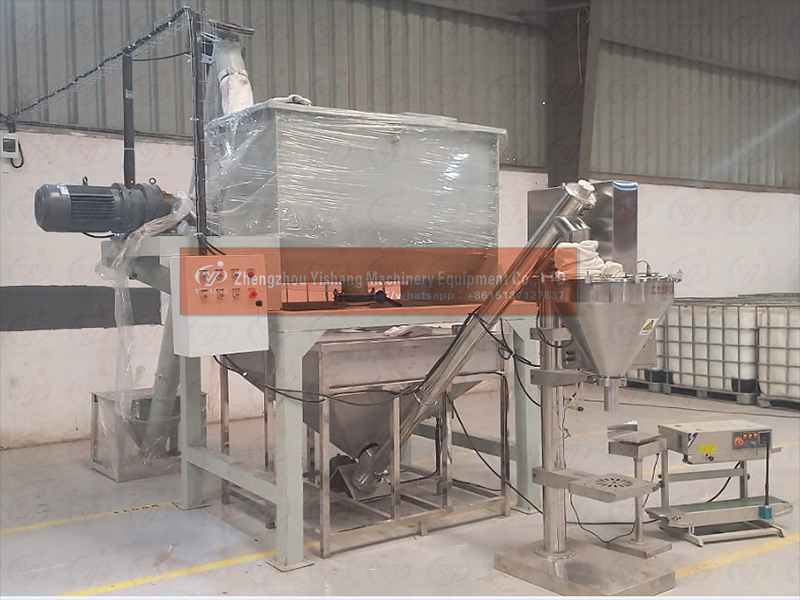
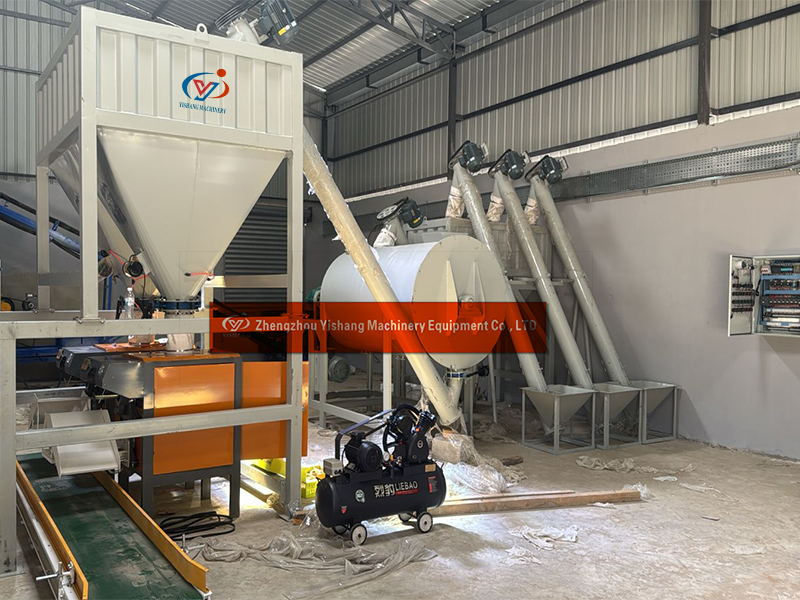
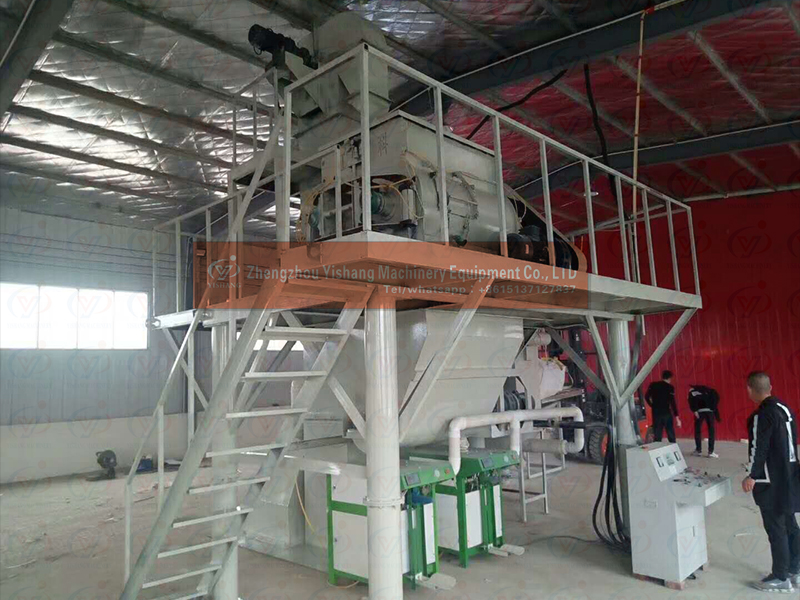
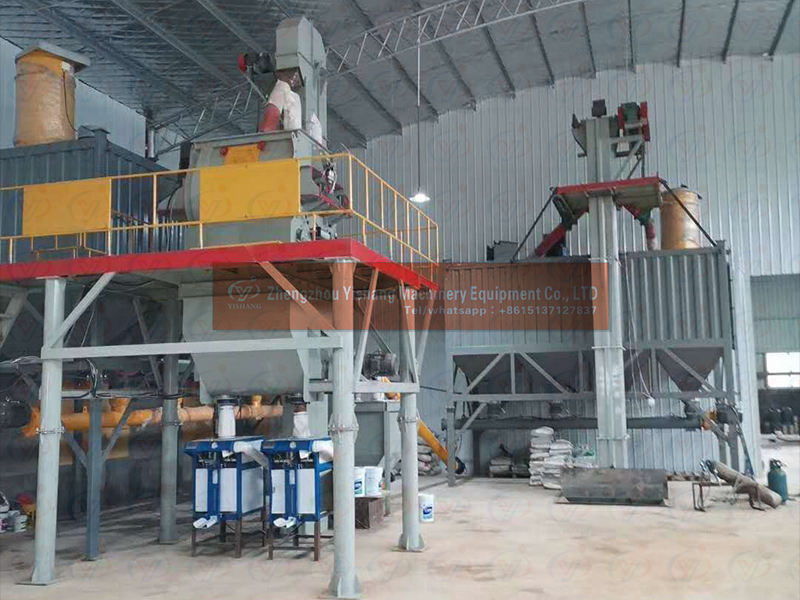
Typical Investment Range: $1,500 - $15,000
Capacity Range: 1-10 tons per hour
Automation Level: Manual batching, basic mixing
Simple lines consist of stand-alone mixers, manual feeding hoppers, and basic packaging equipment. Raw materials are weighed manually or with simple scales, and operators control the mixing cycle manually.
Best Suited For:
Startup operations testing new markets
Small workshops producing for local construction sites
Manufacturers focusing on single-product, low-volume output
Budget-constrained buyers with available cheap labor
Limitations to Consider:
Inconsistent batch quality due to human error
Limited recipe flexibility
Difficult to scale for growing demand
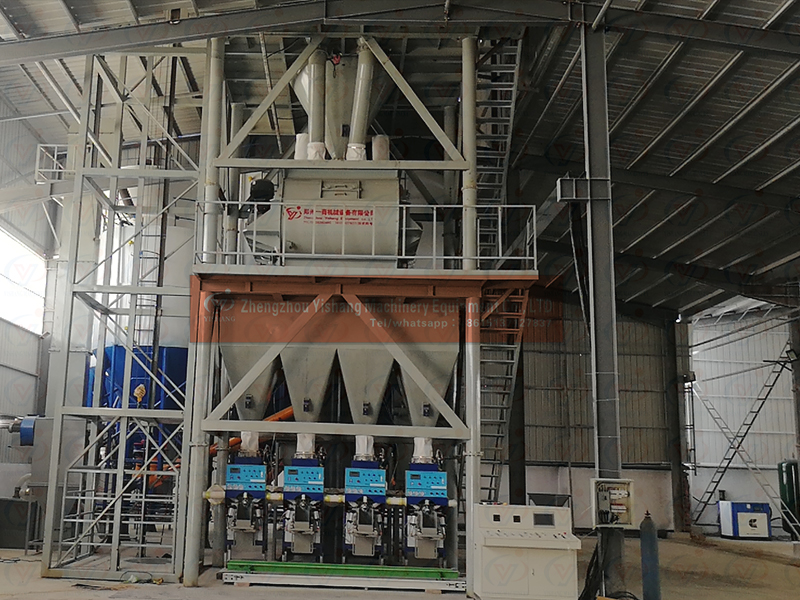
Typical Investment Range: $7,000 - $45,000
Capacity Range: 5-20 tons per hour
Automation Level: PLC-controlled batching, manual intervention for certain processes
Semi-automatic lines feature automated weighing systems for major ingredients, PLC control panels for recipe management, and integrated dust collection. However, material feeding, packaging, or palletizing may still require manual operation.
Best Suited For:
Established regional producers
Manufacturers producing 2-3 different mortar types
Operations with moderate labor costs
Companies seeking balance between investment and automation
Key Advantages:
Improved consistency over manual lines
Moderate labor reduction (3-4 operators per shift)
Reasonable entry point for automation experience
Upgradeable to full automation later
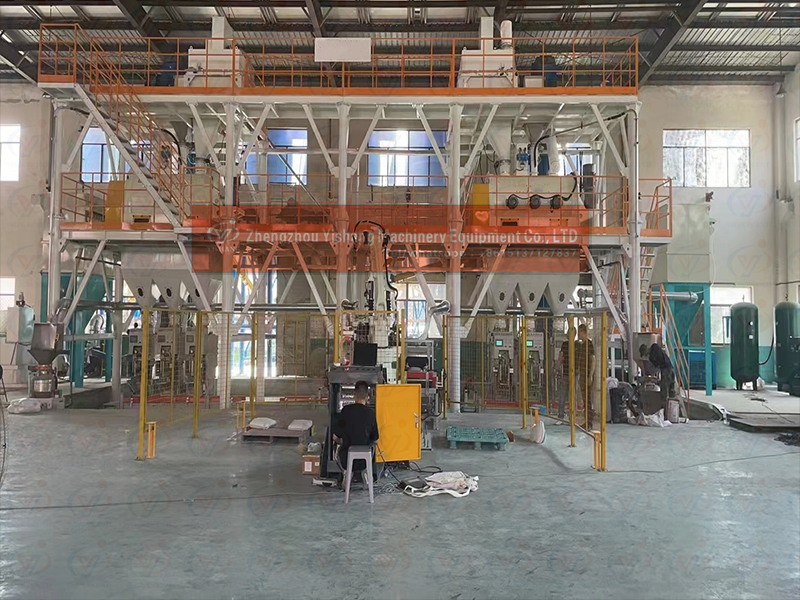
Typical Investment Range: $50,000 - $130,000+
Capacity Range: 15-50+ tons per hour
Automation Level: Complete PLC control, minimal human intervention
Fully automatic systems integrate raw material silos, precision feeding systems (loss-in-weight accuracy ±0.5%), high-efficiency mixers, automated packaging, and often robotic palletizing . The entire process—from material intake to finished pallets—requires only 1-2 supervisory operators per shift.
Best Suited For:
Large-scale commercial producers
Manufacturers serving multiple markets with diverse products
Operations in high-labor-cost regions
Companies prioritizing quality consistency and scalability
Financial Impact:
A fully automated 30 TPH line can save $120,000+ annually in labor costs alone compared to semi-automatic operations, while reducing material waste by 3-4% .
| Your Market Situation | Recommended Line Type | Rationale |
|---|---|---|
| Testing new market, uncertain demand | Simple/Basic | Minimize upfront risk, validate demand before scaling |
| Established local demand, 1-2 products | Semi-Automatic | Balance cost and efficiency, room to grow |
| Regional supplier, 3-5 products | Fully Automatic | Maximize consistency, reduce labor dependency |
| Export-oriented, multiple formulations | Fully Automatic + Customization | Flexibility for diverse recipes, quality certification requirements |
| High-volume commodity production | Fully Automatic + High-Capacity | Economies of scale, lowest cost per ton |
Investing in a dry mortar production line is a capital-intensive decision. Before signing any contract, you must model the financial returns with realistic assumptions.
Many buyers focus on equipment price while overlooking operational inefficiencies that quietly destroy profitability. Traditional or semi-automatic lines typically suffer from these five profit leaks :
| Cost Center | Industry Average Impact | Annual Cost for 30 TPH Plant* |
|---|---|---|
| Raw Material Waste | 2-5% overuse due to inaccurate batching | $45,000 - $120,000 |
| Energy Inefficiency | 15-25% excess consumption | $30,000 - $50,000 |
| Labor Overhead | 4-6 operators per shift | $160,000 - $240,000 |
| Quality Rejects/Rework | 1-3% off-spec product | $20,000 - $60,000 |
| Unplanned Downtime | 5-10% production loss | $75,000 - $150,000 |
Total Estimated Annual Hidden Cost: $330,000 - $620,000
*Estimates based on average material costs, energy rates, and labor wages in emerging markets
These aren't expense lines on your P&L—they're pure profit leakage that better equipment can seal.
The theoretical annual output of your dry mortar production line is determined by its designed capacity and operational planning :
Basic Formula:Annual Output (tons) = Hourly Capacity × Effective Daily Operating Hours × Annual Working Days
Example: A 20 TPH fully automatic line operating 18 hours/day for 280 days annually:20 TPH × 18 hours × 280 days = 100,800 tons/year
Key Variables to Consider:
Hourly Capacity: Rated output of the plant (verified through testing)
Effective Daily Hours: Account for breaks, maintenance, changeovers (16-20 hours realistic)
Annual Working Days: Typically 250-300 days, factoring holidays and major maintenance
Revenue = Annual Output × Average Selling Price (per ton)
Research local market prices for your target products. High-value specialized mortars (tile adhesives, insulation systems) typically command 30-50% premiums over standard plasters .
Raw Material Cost:Annual Output × (Sum of cement, sand, additive costs per ton)
Raw materials represent the largest cost component—typically 60-75% of production cost .
Packaging Cost:(Annual Output ÷ Bag Weight) × Cost per Bag
Direct Labor & Utilities:
Calculate wages for operators (consider shift requirements) and energy consumption based on equipment specifications.
Depreciation & Maintenance:
Annualize equipment cost over expected life (typically 10-15 years) and add 2-3% of equipment value for routine maintenance .
Other Overheads:
Plant rent, administration, marketing, quality control.
Annual Gross Profit = Revenue - (Raw Materials + Packaging)Annual Net Profit = Gross Profit - (Labor + Utilities + Depreciation + Overheads)
Payback Period (years) = Total Initial Investment ÷ Annual Net Profit
A well-configured dry mortar production line typically achieves payback within 12-24 months .
Client Profile: A building materials supplier in Southeast Asia operated a 20 TPH semi-automatic line struggling with high labor costs, 2.5% reject rates, and inability to meet growing demand .
After Installing Fully Automatic Line:
Capacity increased from 20 TPH to 28 TPH (+40%)
Labor reduced from 5 to 2 operators per shift
Reject rate fell from 2.5% to 0.4%
Energy per ton reduced by 28%
Financial Outcome (Year 1):
Additional revenue (from increased capacity): $420,000
Annual operational savings: $295,000
Total financial benefit: $715,000
| Ratio | Formula | Target |
|---|---|---|
| Return on Investment (ROI) | (Net Profit ÷ Total Investment) × 100 | >30% annually |
| Payback Period | Total Investment ÷ Annual Net Cash Flow | <24 months |
| Break-Even Point | Fixed Costs ÷ (Selling Price - Variable Cost per Unit) | <50% of capacity |
Verifying supplier credibility is essential when sourcing from overseas. A structured evaluation should cover technical capability, operational reliability, and after-sales support.
Before visiting (or conducting a virtual audit), prepare:
Detailed requirement document: Output targets, space constraints, power specifications, product types
Question list: Technical specifications, certification documentation, reference clients
Inspection checklist: Physical infrastructure, manufacturing processes, quality controls
Look for these indicators of serious manufacturing capability :
Factory size exceeding 3,000m² with dedicated assembly zones
In-house engineering teams for custom design
Precision manufacturing equipment (laser cutting, robotic welding, CNC machining)
On-site testing bays for dry runs and calibration
Vertical integration (in-house foundries, machining, coating facilities)
Mixing System:
The mixer is the heart of any dry mortar production line. Verify :
Mixer type (twin-shaft paddle mixers preferred for most applications)
Lining material and thickness (wear-resistant options)
Mixing homogeneity (target ≥99% uniformity)
Batch cycle time
Weighing Accuracy:
Precision feeding systems should achieve :
±0.5% accuracy for loss-in-weight systems
±1% for volumetric systems
Calibration certificates available
Control System:
Prioritize PLC-based automation from reputable brands (Siemens, Delta, Schneider) with :
Touchscreen HMI for recipe management
Remote monitoring capability
Multilingual interface options
Request and verify these certifications :
| Certification | What It Verifies | How to Verify |
|---|---|---|
| ISO 9001 | Quality management systems | Cross-check with issuing body database |
| CE Marking | Electrical safety, structural integrity | Review technical files, test reports |
| SGS/BV Inspection | Third-party quality verification | Request inspection certificate |
| Material Certificates | Steel grades, wear parts composition | Mill test reports |
Request data on these key performance indicators :
On-time delivery ≥95%: Indicates production planning and logistics coordination
Response time ≤4 hours: Reflects dedicated export team readiness
Reorder rate >30%: Suggests customer satisfaction and repeat business
If physical visits aren't possible, conduct a structured virtual audit :
Request live video walkthrough of production facilities (not pre-recorded)
Ask to see specific equipment relevant to your order under operation
Request video of quality control processes including material testing
Interview engineering team about customization capabilities
Contact 2-3 reference clients in similar markets or applications
Reluctance to provide detailed specifications or technical drawings
Inability to show live production or recent exports
Vague warranty terms or unclear spare parts availability
Pressure for full payment before production
Certifications that don't match company name or location
Beyond the initial equipment purchase, ongoing operational costs determine your ultimate profitability. Here are scientifically-proven cost-saving measures for dry mortar production line operations .
Bulk Purchasing:
Buying raw materials in bulk can reduce costs by 5-10%. Negotiate annual contracts with suppliers based on projected consumption .
Supplier Relationships:
Build long-term partnerships with reliable raw material suppliers. Consider joint purchasing with other local plants to increase bargaining power.
Quality Control:
Test incoming materials (cement strength, sand gradation, additive performance) to prevent production inefficiencies. Poor materials increase mixing time, reduce quality, and generate waste .
Equipment Selection:
Choose dry mortar production line components with energy-efficient features :
Variable frequency drives (VFDs) on motors
IE3/IE4 premium efficiency motors
Optimized aerodynamic conveying systems
Waste heat recovery on dryers
Process Optimization:
Schedule continuous production runs to avoid repeated startup energy spikes
Maintain proper insulation on heated components
Monitor power consumption per ton to identify deterioration
Lighting & HVAC:
LED lighting and optimized HVAC settings typically reduce facility energy costs by 15-20% .
Implement a structured preventive maintenance program :
| Frequency | Activities |
|---|---|
| Daily | Visual inspections, lubrication checks, cleaning |
| Weekly | Belt tension checks, bearing temperature monitoring |
| Monthly | Calibration verification, wear part measurements |
| Quarterly | Full system inspection, electrical connection tightening |
| Annually | Major overhaul, certification renewal |
Expected Benefits:
30-50% reduction in unplanned downtime
20-30% extended equipment life
Consistent product quality
Lower emergency repair costs
Maintain an optimal inventory of critical spare parts :
Must-Have Spares:
Mixer paddles and liners (wear items)
Conveyor belts and bearings
Sensors and limit switches
Control system fuses and modules
Seals and gaskets
Inventory Strategy:
Analyze historical usage data to determine optimal stock levels. Establish agreements with suppliers for 72-hour emergency delivery of non-stocked items .
Dust Collection:
High-efficiency pulse-jet dust collectors should capture >99% of particulates. Recycled dust can often be incorporated as filler in appropriate products .
Reject Reduction:
Automated systems with closed-loop control reduce reject rates from 2-3% to below 0.5% .
Raw Material Storage:
Proper silo and warehouse management prevents material spoilage, contamination, and degradation.
Phase 1: Specification Development (Weeks 1-2)
Define output requirements (TPH, annual volume)
Identify target products (formulations, bag sizes)
Determine site constraints (space, power, access)
Establish budget parameters
Phase 2: Supplier Shortlisting (Weeks 3-4)
Research manufacturers (Alibaba, industry directories, trade shows)
Verify certifications and export history
Request initial proposals and technical data
Phase 3: Detailed Evaluation (Weeks 5-6)
Conduct virtual or physical audits of top candidates
Request client references and contact them
Obtain detailed technical specifications and drawings
Compare total cost of ownership (not just purchase price)
Phase 4: Commercial Negotiation (Weeks 7-8)
Define scope of supply clearly (inclusions/exclusions)
Establish payment terms (typically 30% deposit, 70% before shipment)
Clarify warranty (12 months typical) and spare parts commitments
Phase 5: Contract Finalization (Week 9)
Include detailed technical specifications in contract
Define acceptance criteria and testing procedures
Specify documentation requirements (manuals, drawings, certificates)
Use secure payment methods (letter of credit, Alibaba Trade Assurance)
Recommended Payment Structure :
30% deposit with order
40% upon completion of manufacturing (with inspection report)
20% before container loading
10% after successful commissioning
Payment Protection Options:
Alibaba Trade Assurance (covers quality and delivery)
Letter of Credit at sight
Third-party escrow services
Inspection before final payment
Standard models: 30 days
Customized systems: 45-60 days
Ready-stock units: 15 days
Shipping Considerations:
Sea freight: 20-40 days depending on destination
FOB terms: Buyer arranges shipping from Chinese port
CIF terms: Supplier arranges shipping to destination port
Air freight: Generally impractical due to weight/size
Documentation Required:
Commercial invoice
Packing list
Bill of lading
Certificate of origin
Inspection certificates (if applicable)
Insurance certificate
Cross-check ISO and CE certifications with issuing bodies. Request unedited factory walkthrough videos. Ask for proof of export history (customs documentation). Contact reference clients in your region. Suppliers with over $500,000 in annual sales tend to have more stable operations .
For properly configured lines serving established markets, payback typically ranges from 12-24 months. Fully automatic lines often achieve faster payback through labor savings and waste reduction .
Yes, multiple suppliers offer functional systems in the $3,500-$9,800 range for simple or semi-automatic configurations. However, verify that pricing includes motors, control panels, and safety guards. These entry-level units suit startups but may lack durability for continuous operation .
Manufacturers commonly support :
Voltage configurations (220V/380V/415V, 50Hz/60Hz)
Control panel languages and branding
Paint colors and logo placement
Packaging bag sizes and labeling
Integration with existing SCADA/ERP systems
Most suppliers offer options :
Remote guidance via video call (included)
On-site technician deployment (typically $150-$300/day plus travel)
Comprehensive manuals and video tutorials
Operator training at manufacturer's facility (often included for major orders)
Routine maintenance includes :
Daily: Visual inspections, lubrication
Weekly: Calibration checks, wear monitoring
Monthly: Belt tensioning, electrical checks
Annual: Major inspection, wear part replacement
Pulse-jet dust collection systems (≥99% efficiency)
Enclosed conveyors and transfer points
Low-noise design (≤75 dB)
Energy-efficient motors and drives
Selecting the right dry mortar production line is one of the most consequential decisions you'll make for your construction materials business. By following the framework outlined in this guide—matching line type to market demand, calculating realistic ROI, conducting thorough supplier audits, and implementing cost-saving measures—you position yourself for sustainable profitability.
Remember these key takeaways:
Match line type to your actual market: Don't over-buy capacity you can't use, but don't under-invest if you're serving quality-sensitive markets.
Model total cost of ownership: The cheapest purchase price rarely delivers the lowest cost per ton over 10 years.
Verify before you commit: Structured audits and reference checks prevent costly mistakes.
Plan for ongoing optimization: Energy management, preventive maintenance, and waste reduction compound your returns over time.
The global dry mortar market continues to grow, driven by construction industrialization and demand for energy-efficient buildings. With the right equipment strategy, you're not just buying machinery—you're building the foundation for long-term business success.
About This Guide
This comprehensive procurement guide was developed through analysis of industry data, manufacturer specifications, and B2B procurement best practices. For specific project consultation or equipment inquiries, we recommend contacting multiple verified suppliers with detailed requirement documents to obtain competitive proposals tailored to your needs.+8615137127837

Whatsapp:++8615137127837
WechatID:+8615137127837
Email:[email protected]
Alibaba Store:
https://zzyishang.en.alibaba.com


 ++8615137127837
 +8615137127837

 Alibaba Store
